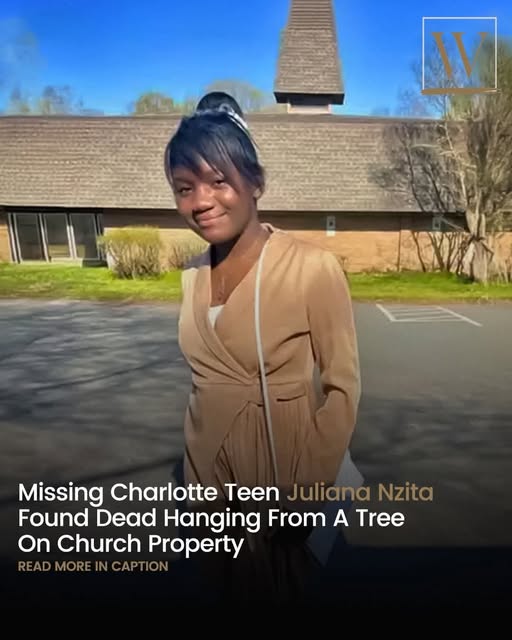
The reported death of 16-year-old Juliana Nzita has prompted widespread grief and ongoing discussion within her community, as family members, residents, and online supporters continue to seek clarity and understanding surrounding the circumstances of her passing.
According to circulating reports, Juliana Nzita had been reported missing around April 28 and was later discovered approximately 10 days afterward on May 8 on church property in the Charlotte area. It has been widely stated in community discussions that her body was found on the grounds of a House of Prayer by a local volunteer. Following the discovery, early accounts indicate that authorities initially treated the case as a suspected suicide and closed the matter shortly thereafter.
These reports have not only led to deep sorrow among those who knew Juliana but have also sparked broader conversations about how missing persons cases—particularly those involving young Black girls—are handled, investigated, and communicated to the public. Community members and advocates have expressed concern over what they view as inconsistencies in response times, investigative transparency, and resource allocation in similar cases.
Juliana is being remembered by those close to her as a young girl whose life ended far too soon, leaving behind family, friends, and classmates who are struggling to process the loss. Many who have spoken about her describe her as someone who mattered deeply to her community and whose absence is profoundly felt.
At the same time, differing narratives circulating online have fueled debate and emotional responses, with some supporters calling for further investigation and a more detailed public accounting of the events surrounding her death. Others urge caution and emphasize the importance of awaiting verified findings from official sources before drawing conclusions.
As of now, there is no widely confirmed public report from law enforcement or medical authorities providing additional detail beyond what has been shared in initial and secondary accounts. The situation remains one that is being discussed heavily in community spaces, advocacy forums, and social media platforms.
In moments like these, communities often come together to grieve, seek answers, and advocate for those they believe may not have received adequate attention or care. Juliana Nzita’s name has become part of that larger conversation, as people continue to call for compassion, clarity, and accountability.
Her memory, for many, is now tied not only to personal loss but also to an ongoing demand for understanding and justice in cases involving vulnerable young people.